Do You Know Your Instructor ?
Driving instructors in the UK progress through a structured qualification process overseen by the DVSA. Before becoming fully qualified, instructors operate as Potential Driving Instructors (PDI) on a trainee licence. Only about one-third of trainees successfully become fully qualified, highlighting the challenging nature of the qualification process. Once they pass all required tests, they become Approved Driving Instructors (ADI).
Some of the trates of trainees are sitting on the side of the road and you not driving
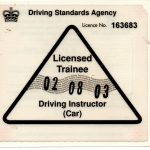
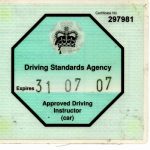
Differences Between a Trainee Driving Instructor and a Fully Qualified Instructor
This page outlines the key distinctions between a Trainee Driving Instructor (PDI) and a Fully Qualified Driving Instructor (ADI) in the UK. It is designed to give learners, parents, and stakeholders a clear understanding of what each status means in practice.
Overview
Driving instructors in the UK progress through a structured qualification process overseen by the DVSA. Before becoming fully qualified, instructors operate as Potential Driving Instructors (PDI) on a trainee licence. Only about one-third of trainees successfully become fully qualified. Once they pass all required tests, they become Approved Driving Instructors (ADI).## Overview
Qualification Status
Status | Trainee Driving Instructor (PDI) | Fully Qualified Instructor (ADI) |
DVSA Recognition | Holds a trainee licence (pink badge) | Holds a full DVSA qualification (green badge) |
Training Stage | Has passed Parts 1 & 2; still completing Part 3 | Has passed all three DVSA qualifying tests |
Licence Duration | Valid for 6 months | Renewable every 4 years |
Training and Experience
Trainee Driving Instructor (PDI)
- Has completed significant training but is still developing teaching skills.
- Must be receiving ongoing supervision from a DVSA-registered trainer.
- May be gaining real-world experience to prepare for the Part 3 instructional ability test.
Fully Qualified Instructor (ADI)
- Has demonstrated full competence in instructional techniques.
- Has completed all DVSA assessments, including instructional ability.
- Expected to maintain and update skills through periodic standards checks.
Teaching Standards and Oversight
Area | PDI | ADI |
Standards Check | Not required until fully qualified | Required periodically by DVSA |
Supervision | Must be supervised or follow a structured training programme | Works independently |
Teaching Quality Assurance | Monitored through trainer oversight | Monitored through DVSA standards checks |
Badges and Identification
- PDI: Displays a pink triangular badge in the windscreen.
- ADI: Displays a green octagonal badge.
These badges help learners understand the instructor’s qualification level.
Teaching Capability
What PDIs Can Do
- Deliver paid driving lessons legally under a trainee licence.
- Provide structured instruction while continuing their own development.
- Offer high-quality lessons, often with close support from their trainer.
What ADIs Can Do
- Teach independently without supervision.
- Provide advanced tuition, refresher lessons, motorway lessons, and more.
- Offer a fully qualified level of expertise backed by DVSA assessment.
Professional Expectations
Expectation | PDI | ADI |
Professional Conduct | Must follow DVSA code of practice | Must follow DVSA code of practice |
CPD (Continuing Professional Development) | Encouraged | Strongly expected |
Public Perception | Seen as developing professionals | Seen as fully established instructors |
Summary
A PDI is a developing instructor gaining practical experience while completing their qualification. A fully qualified ADI has demonstrated full competence and operates independently. Both can offer valuable instruction, but their level of qualification and oversight differs.
Key Takeaways
- PDIs are competent trainees working under supervision.
- ADIs are fully qualified professionals assessed by the DVSA.
- Both play an important role in helping learners become safe, confident drivers.